

When people think about improving in Brazilian Jiu-Jitsu, they usually focus on techniques, drilling, and sparring.
But there’s another factor that plays a major role in how well someone performs on the mat: Conditioning.
At AKXE Academy in Agoura Hills, students have access to training equipment that allows them to improve strength, endurance, and mobility — all of which directly support better performance in Brazilian Jiu-Jitsu.
A training environment that supports both technical development and physical conditioning can make a major difference.
1. Why Conditioning Matters in Brazilian Jiu-Jitsu
Brazilian Jiu-Jitsu is physically demanding in ways many beginners don’t expect. Success on the mat depends on several physical attributes, including:
- Muscular endurance
- Core stability
- Grip strength
- Hip mobility
- Cardiovascular conditioning
Without a solid conditioning base, even technically skilled students may fatigue quickly during sparring or struggle to maintain strong positions.
Developing strength and endurance outside of technique drills helps create the physical foundation that supports effective Jiu-Jitsu.
2. Fitness That Supports Your BJJ Training
Conditioning for grappling is different from general gym workouts. For Brazilian Jiu-Jitsu practitioners, training often focuses on:
Grip Strength: Strong grips help control sleeves, collars, and wrists during Gi training.
Core Stability: Core strength supports escapes, guard retention, sweeps, and transitions.
Hip Mobility: Mobile hips improve guard work, bridges, and dynamic movement.
Endurance: Better conditioning allows students to stay calm and controlled throughout longer rounds of rolling.
Focusing on these areas can significantly improve performance.
3. Supporting BJJ Injury Prevention
Another major benefit of conditioning is BJJ injury prevention.
Brazilian Jiu-Jitsu places stress on joints such as:
- Shoulders
- Knees
- Neck
- Lower back
Strengthening the surrounding muscles and improving mobility helps protect these areas and allows students to train more consistently.
When conditioning becomes part of a training routine, students often experience better recovery and reduced risk of common overuse injuries.
4. Training Equipment Available for Students
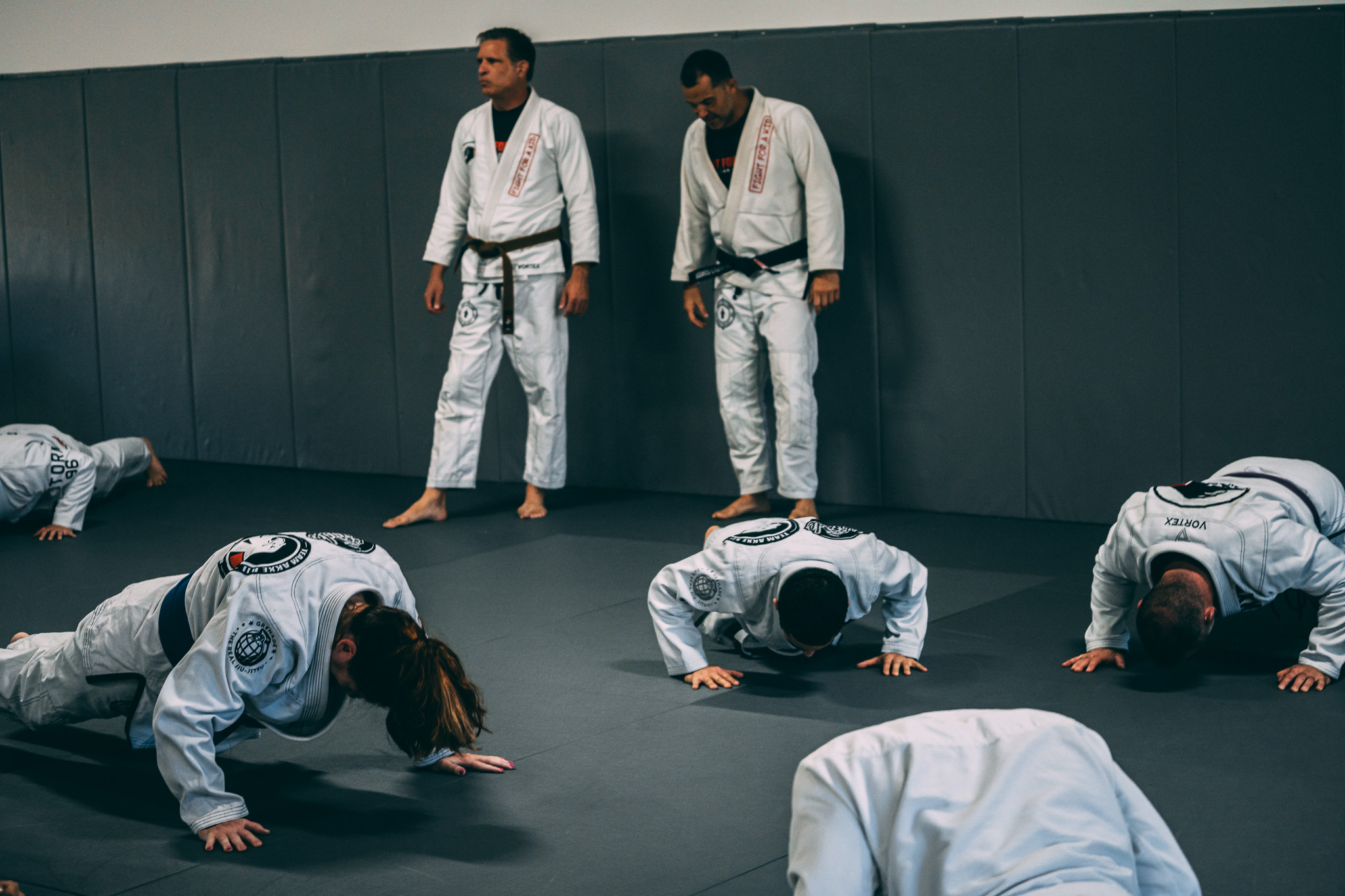
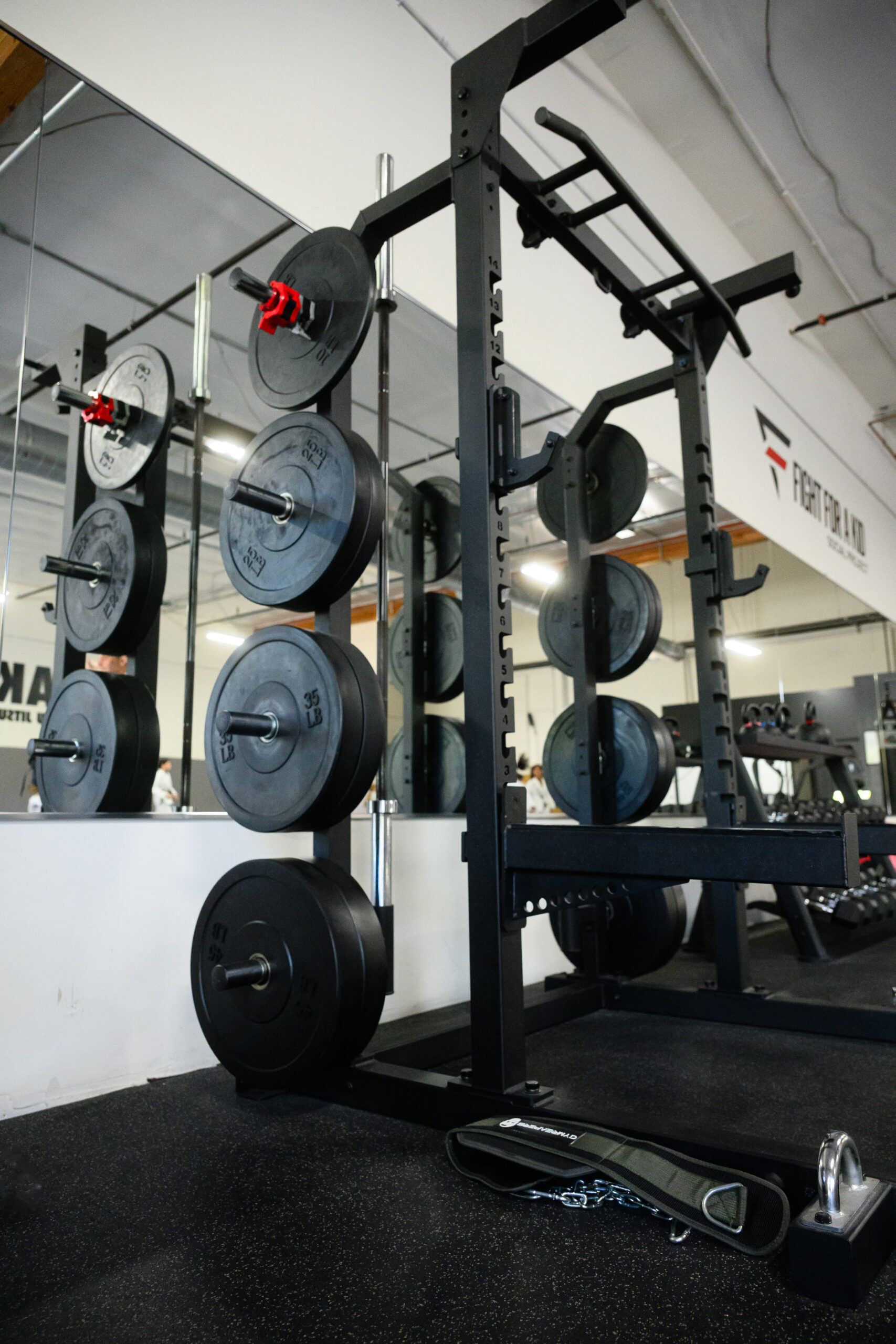
At AKXE Academy, students have access to equipment that can help support their conditioning goals before or after class.
This allows practitioners to work on strength, endurance, and mobility alongside their technical training.
Many students use this time to:
- Improve grip and upper-body endurance
- Strengthen their core
- Increase overall athletic conditioning
For students serious about improving their Brazilian Jiu-Jitsu performance, small investments in conditioning can make a noticeable difference on the mat.
5. A Complete Approach to Martial Arts Training
Learning techniques is the heart of Brazilian Jiu-Jitsu.
But physical preparation allows those techniques to be applied more effectively — especially during live sparring.
Stronger Body, Better Jiu-Jitsu
Brazilian Jiu-Jitsu is often called a lifelong martial art.
Longevity in the sport depends not only on skill, but also on maintaining a strong and resilient body.
At AKXE Academy in Agoura Hills, students are encouraged to build both technique and conditioning — creating a balanced approach to training that supports long-term progress.
Because sometimes the biggest improvement in your Jiu-Jitsu doesn’t come from learning a new technique. It comes from building the strength and endurance that allow you to perform every technique better.

Leave A Comment